
Choosing between fragrance oils vs essential oils can feel confusing when both promise beautiful scents and soothing benefits. Each option brings something unique to the table, from nature-derived purity to customisable aromas crafted in labs. Essential oils often appeal to folks seeking natural skincare with possible therapeutic properties and perks, while fragrance oils attract those who want a long-lasting scent and aren’t fussed about natural sourcing.
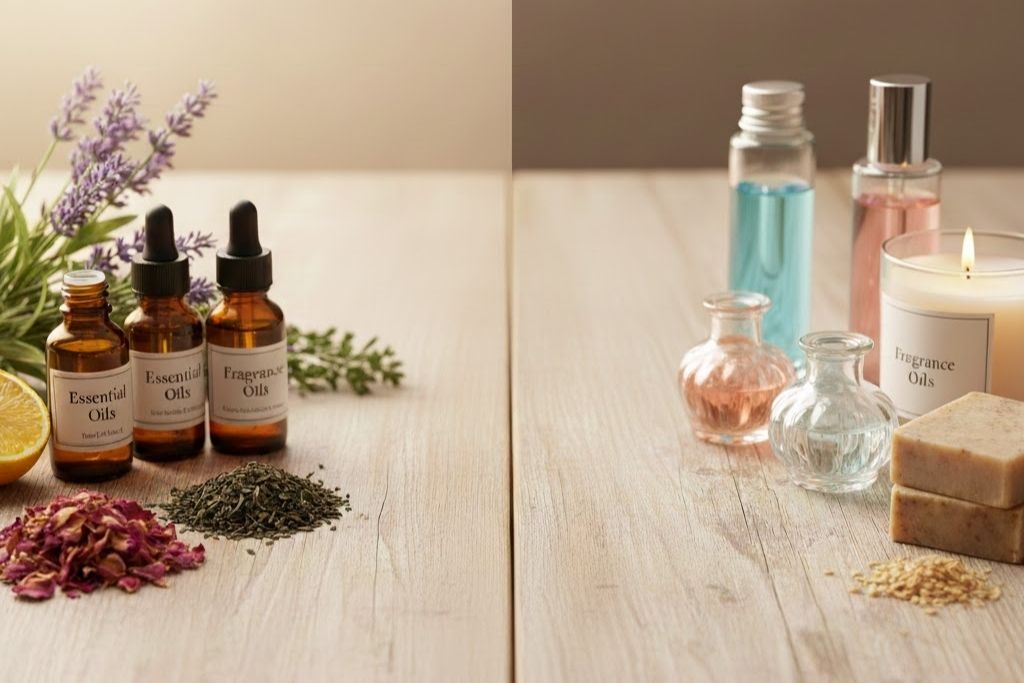
It’s easy to mix them up since they both pop up in lotions, soaps, serums, and so on. But their differences go beyond just where they come from or how they smell – they affect how your skin reacts and how safe they are for regular use. Knowing these contrasts can help you steer clear of irritation and pick the right fit for your skin goals.
What Are Essential Oils? Nature’s Pure Aromas
Essential oils are concentrated plant extracts that hold the signature scent and active compounds of their botanical source. Their purity, extraction method, and where they’re sourced from all play a part in how well – and how safely – they work on your skin.
Definition, Origin, And Purity
Essential oils are highly concentrated plant extracts that bottle up a plant’s aroma and its active ingredients. Sourced from leaves, flowers, fruits, bark, and roots, they have been used for cosmetic and medicinal purposes for centuries. Unlike synthetic fragrance oils, essential oils are entirely plant-based, which appeals to those seeking minimal-ingredient skincare.
While true essential oils are 100% natural, not every bottle on the shelf is the real deal; some are diluted or mixed. Purity depends on the plant source, harvesting, and distillation. Trustworthy brands list the botanical name and extraction method, and third-party tests like GC/MS analysis confirm the oil’s chemical makeup. According to The Nature’s Magic Hub, these oils capture the plant’s most active compounds, so they offer more than just scent.
How Essential Oils Are Made
Extracting essential oils usually involves steam distillation, cold pressing, or solvent extraction. Steam distillation’s the go-to for leaves, flowers, and stems – it uses vapour to pull out the good stuff, which then separates into oil and water.
Cold pressing is better for citrus peels, using mechanical force instead of heat to keep things fresh. Delicate flowers like jasmine might need solvent extraction, which uses natural solvents before purifying the final product.
Quality control really matters here. Every batch is tested for purity and chemical makeup. If they get overheated or mishandled, the oil quality drops, both in smell and skin benefits (see Gamut Packaging).
Therapeutic Benefits For Skin
When diluted with carrier oils like jojoba or coconut oil, essential oils can be a real asset for skin. They’re valued for their antimicrobial, soothing, and balancing effects, providing significant therapeutic benefits. Tea tree oil, for example, is a go-to for acne because of its antibacterial punch, while lavender essential oilcalms things down and helps with redness.
Some oils even help with circulation and cell renewal, which can mean smoother, brighter skin. Plus, their scents aren’t just for show – aroma can lift your mood, and less stress may mean fewer breakouts.
A safe bet is a 1–2% dilution (about 6–12 drops per ounce of carrier oil). Always patch test first – undiluted oils can definitely irritate. Used right, they’re a solid plant-based option for skin support. This is a crucial step when incorporating essential oils into any new regimen.
Common Essential Oils For Skincare
Here’s a quick look at some popular essential oils for your skin:
| Essential Oil | Key Benefit | Suitable Skin Type |
| Lavender | Calms irritation and supports moisture balance | All skin types |
| Tea Tree | Fights bacteria and reduces blemishes | Oily, acne-prone |
| Rosehip (contains rose essential oil compounds) | Promotes repair and brightens dull skin | Dry, mature |
| Chamomile | Soothes inflammation and relieves redness | Sensitive skin |
| Geranium | Balances oil production and tones skin | Combination |
You’ll see these in skincare products that lean toward gentle plant aromatics over synthetic natural fragrance. As Zenful points out, essential oils bring both scent and potential skin benefits – fragrance oils are there just for the smell.
What Are Fragrance Oils? Crafted Scents For Every Preference
Fragrance oils are all about blending chemistry and creativity to create reliable, long-lasting scents. They go way beyond what you can get from plants alone, offering variety and stability for both DIY and big-brand skincare.
Definition, Composition, And Purity
Fragrance oils are made from a mix of aromatic compounds, which can be synthetic, natural extracts, or both. They’re engineered for consistency, so you won’t get surprises from batch to batch. Unlike essential oils, fragrance oils are lab creations that may include stabilisers and solvents to control the scent.
While not pure natural extracts, many are safe for cosmetics. Here, purity is more about precise formulation than being all-natural. Good brands will show IFRA (International Fragrance Association) compliance and list known allergens, so you can choose based on your own sensitivities. Fragrance oils offer consistency and a bigger scent palette than you could get from plants alone, often designed to mimic natural scents.
How Fragrance Oils Are Made
Fragrance oil production is all about blending the right ingredients. Perfumers start with individual aroma chemicals – maybe synthetic notes like aldehydes or natural isolates like vanillin. This is how many synthetic fragrance oils are developed.
These get mixed with carriers like dipropylene glycol or fractionated coconut oil to help them dissolve and play nicely with skin. Aromachology Oils notes that these blends go through tests for how they evaporate, change colour, or handle heat.
After blending, they’re aged so the scent settles and becomes stable. This lets manufacturers produce huge batches with the same scent every time – no surprises.
The Role Of Fragrance Oils In Skincare
Fragrance oils bring pleasant, memorable aromas to lotions, soaps, and creams. They don’t usually change the texture or colour, but they do help a product stand out with a signature scent.
They’re used in low concentrations (usually 0.5–2%) to keep irritation low but scent noticeable. HBNO’s discussion mentions that fragrance oils offer uniform results across big batches – great for commercial skincare products.
If your skin’s on the sensitive skin side, look for “phthalate-free” or “cosmetic grade” labels. Safety depends on dilution and the use of proven skin-safe ingredients, not just whether it’s natural.
Types Of Fragrance Oil Scents
Fragrance oils cover a massive range of scent families – way more than only essential oils alone. They can mimic floral, fruity, woody, gourmand, or fresh profiles, and can be customised for seasons or personal tastes. These popular fragrance oils are especially common in candle making and other household products.
Some formulas mix botanicals with synthetic notes for more complex scents. Ever noticed a lotion that smells like amber-vanilla or ocean breeze? That’s usually a lab-made blend. Indigo Fragrance explains that synthetics open up thousands of scent options you just can’t get from nature.
Essential Oils Vs. Fragrance Oils For Skin: Key Differences At A Glance
This table compares essential oils vs fragrance oils in key areas:
| Feature | Essential Oils | Fragrance Oils |
| Origin | Natural plant extracts | Synthetic or mixed aromatic compounds |
| Scent Consistency | Can vary by batch | Stable and uniform |
| Therapeutic Properties | Therapeutic properties and natural benefits present | No therapeutic benefits |
| Common Uses | Aromatherapy, natural skincare | Perfumes, candle making, lotions |
| Skin Sensitivity Risk | Can irritate reactive skin if not diluted | May trigger allergies due to artificial ingredients |
Which Is Best For Your Skin? Making An Informed Choice
What works for your skin ultimately depends on your own sensitivities. Essential oils bring natural actives that can support skin health when used correctly, while fragrance oils are ideal if you’re after a consistent scent without therapeutic effects.
The Sensitivity Factor: Allergens And Irritants
Both essential oils and fragrance oils can irritate, especially if your skin’s already touchy. Synthetic fragrance oils often contain compounds that can trigger irritation or dermatitis.
With essential oils, the risk is often tied to their concentration and purity. Undiluted essential oils are extremely potent and can cause burns or severe contact dermatitis. Even properly diluted, some oils (like cinnamon, lemongrass, or certain citrus oils) are inherently more irritating or photosensitising (they make your skin sensitive to sunlight). The goal is always to avoid skin irritation.
Fragrance oils carry a different risk: because they are complex synthetic blends, they may contain undisclosed ingredients that are common allergens. If you have sensitive skin or reactive skin, always favour products that are either ‘fragrance-free’ or list their essential oils and fragrance content clearly so you can patch test and be aware of any ingredients you might want to steer clear of.
Essential Oils: The Pros and Cons
| Pros | Cons |
| Therapeutic Benefits: Only essential oils offer anti-microbial, anti-inflammatory, and soothing therapeutic benefits (e.g., tea tree for blemishes, lavender essential oil for calm). | Purity and Cost: Quality varies widely; pure oils are significantly more expensive. |
| Natural Origin: Appealing to those seeking 100% natural, minimal-ingredient skincare with natural benefits. | Safety Risk: Must be correctly dilute essential oils. Risk of irritation, burns, or photosensitivity if used neat or incorrectly. |
| Aromatherapy: The natural scents can provide mood-lifting and stress-reducing effects. | Scent Longevity: Aroma essential oils tend to be less stable and fade faster than fragrance oils. |
Fragrance Oils: The Pros and Cons
| Pros | Cons |
| Consistency and Longevity: Scent is stable and uniform across batches; it lasts longer in products. | No Therapeutic Benefit: Used purely for scent; does not offer active skin-supporting properties. |
| Variety: Fragrance oils offer an endless, customisable scent palette far beyond nature. | Transparency Issues: Formulas may be protected by trade secrets, hiding potential allergens. |
| Cost-Effective: Significantly cheaper to produce, leading to more affordable final products. | Potential Irritants: May contain synthetic compounds that can trigger allergies in sensitive skin people. |
Frequently Asked Questions (FAQ)
Can I mix essential oils and fragrance oils in my products?
Yes. Many manufacturers blend essential and fragrance oils to combine the stability/longevity of fragrance oils with the natural appeal/minor therapeutic properties of essential oils, while managing cost.
Why are essential oils so much more expensive than fragrance oils?
Essential oils are expensive because they require vast amounts of raw plant material (e.g., flowers, roots) and costly extraction processes (like steam distillation) to yield a small amount of oil. Fragrance oils are lab-synthesised and cheaper to produce essential oils at scale.
Should I choose essential oils for natural skincare?
If your primary goal is to gain natural benefits from the product beyond just scent, you should choose essential oils. However, always remember to dilute essential oils properly with a carrier oil like sweet almond oil or grapeseed oil to avoid skin irritation.