
Fragrance can turn an ordinary skin care routine into something you actually look forward to. Whether you’re smoothing on a lotion, scrubbing away the day, or diving into a thick body butter, scent matters. But using fragrance oils in lotions, scrubs, and body butters takes a little know-how if you want them to smell great and stay gentle on your skin.
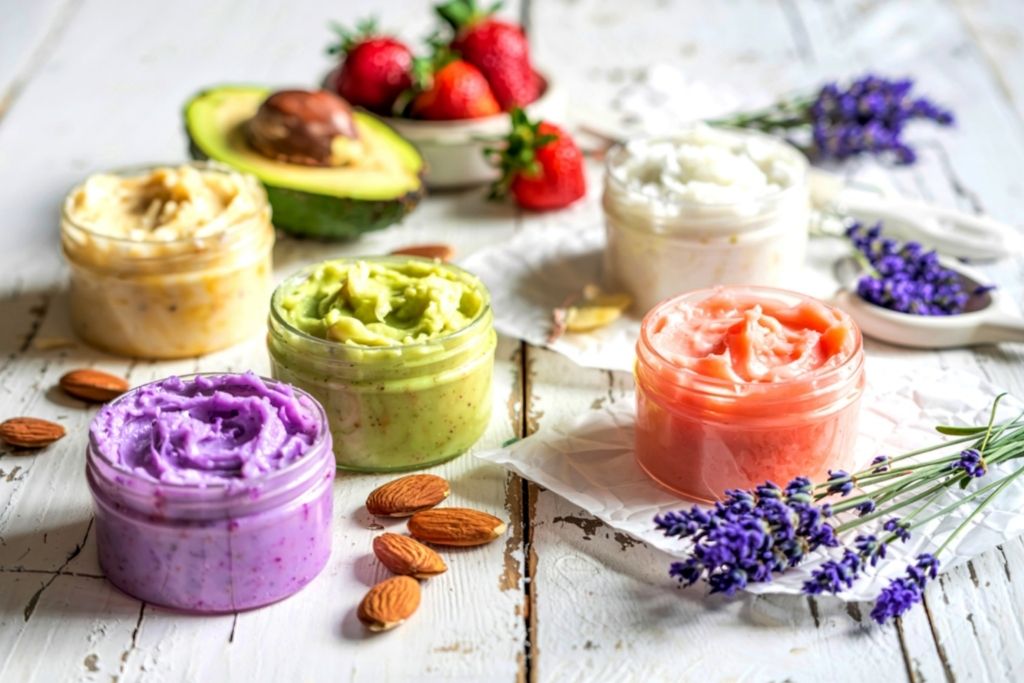
Let’s break down how to:
- Pick between essential oil and fragrance oils.
- Blend them safely.
- Create a scent that actually sticks around.
We’ll get into the nitty-gritty – natural vs synthetic, how much to use, and tricks for even scent in your homemade or store-bought bases.
Understanding Your Scenting Options: Essential Oils Vs. Fragrance Oils
Essential oil and fragrance oils both bring personality to your skin care, but they’re pretty different in terms of where they come from and how they behave. Knowing the basics helps you make smarter choices for your skin and your nose.
What Are Essential Oils? (Nature’s Pure Essence)
Essential oil are plant extracts made through steam distillation or cold pressing. Each one captures a plant’s signature aroma and chemical profile, so you’re getting the real deal – no synthetics.
Think lavender essential oil, peppermint, tea tree oil – these classics show up everywhere for their scent and skin perks. But they’re strong stuff. You have to dilute them before slathering on, or your skin might get cranky. They can also be pricey, since it takes a lot of plant material for just a little oil.
| Pros | Cons |
| All-natural | Pricey |
| Complex, true-to-nature scents | Limited scent palette |
| Sometimes therapeutic | Can irritate sensitive skin |
What Are Fragrance Oils? (Crafted Aromas For Diverse Scents)
Fragrance oils are blends of synthetic and sometimes natural compounds, designed in labs to mimic real scents – or invent new ones entirely.2 You want “ocean breeze” or “birthday cake”? Fragrance oils can do that while helping your skin achieve a beautiful skin tone and skin feeling soft.
They’re more stable and less expensive than essential oil, and their scent sticks around longer. That’s why they’re everywhere in commercial body care.
| Pros | Cons |
| Tons of scent options | Usually synthetic |
| Reliable results | No true therapeutic value – this is not essential oil |
| Long-lasting | Can contain allergens |
Key Differences And Why They Matter For Skincare
| Feature | Essential Oils | Fragrance Oils |
| Origin | Natural plant extracts | Synthetic or blended |
| Scent Range | Limited to natural sources (e.g., eucalyptus oil) | Nearly unlimited |
| Cost | Higher | Lower |
| Longevity | Shorter | Longer |
| Skin Sensitivity | Possible irritation | Depends on formulation |
Prioritising Safety: Essential Guidelines For Skin Application
Getting fragrance right isn’t just about smelling fresh – it’s about keeping your skin happy and preventing skin irritations. Follow safe concentration levels, do patch tests, and stick to global standards so your product never backfires.
The Role Of Dilution (General Guidelines & Carrier Oils)
Never use fragrance oils neat on your skin.
For leave-on products like lotions and butters, stick to 1–3% fragrance oil.3
For rinse-off scrubs, you can go up to 5%.
These numbers are based on industry best practices and safety data. Carrier oils like sweet almond oil, jojoba oil, and fractionated coconut oil help spread the scent and soften any harshness.4 Always measure by weight with a digital scale – too much oil can irritate, too little and you won’t smell a thing.
| Product Type | Fragrance Oil % | Suggested Carrier Oils |
| Lotion | 1–2% | Jojoba oil, Sweet almond oil |
| Body Butter | 1–3% | Shea Butter, Coconut oil |
| Scrub | 2–5% | Grapeseed, Olive Oil |
Always Patch Test First (Step-By-Step)
Never skip this step – it’s your skin’s safety net, especially if you have acne prone skin or sensitive skin.
- Mix your finished product at the right strength.
- Apply a dime-sized amount to your inner forearm.
- Cover lightly and wait 24 hours.
- Check for redness, itching, or swelling.
- If your skin reacts, wash it off. For extra caution, test again after 48 hours.
Understanding IFRA Guidelines
The International Fragrance Association (IFRA) sets global rules for how much of each fragrance ingredient you can use.5
Categories 5A (lotions/creams), 5B (butters/oils), and 5C (rinse-off) cover most body products.
Each IFRA certificate shows the max for each group. Not all essential oils are covered in the same way, so checking the certificate is key.
Use an online IFRA calculator to compare that number to your formula.
Following IFRA ensures your product is safe batch after batch.
How To Incorporate Fragrance Oils Into Lotions, Scrubs & Body Butters
General Steps (Cool Down Phase & Mixing)
Always add fragrance oils in the cool-down phase – below $45^\circ\text{C}$ ($113^\circ\text{F}$). If it’s too hot, your scent could fade or smell off.
Measure at 1–3% by weight.
Mix thoroughly:
- For lotions, use a hand blender or slow mixer.
- For scrubs and body butters, fold gently to avoid air pockets.
Let the product rest 24 hours before bottling so the scent melds with the base.
Scenting Specific Products
| Product | Max Fragrance % | Mixing Tip |
| Lotions | 0.5–2% | Add fragrance at room temperature; stir gently. Too much can break the emulsion. |
| Scrubs | 1–3% | Mix fragrance directly into carrier oils before adding sugar or salt. Avoid overmixing. |
| Body Butters | 0.5–2% | Add fragrance after melting and cooling the base but before it sets. Whip gently. |
Product Stability & Texture: Some fragrance oils can alter thickness, colour, or shelf life. Always test small batches first. Adding vitamin E helps prevent oxidation.6 If lotion separates, tweak your emulsifier or oil ratios.
How To Incorporate Essential Oils Into Body Care
Oils To Use With Caution
Citrus oils (bergamot, lemon, lime) contain furocoumarins that can cause light sensitivity.7 Consider furocoumarin-free versions.
“Hot oils” like cinnamon bark, clove, and oregano can irritate sensitive skin and cause skin irritations.8
Always dilute and patch test these aggressively.
Popular Skin-Friendly Essential Oils
When choosing essential oil, look for ones known to work well with the skin’s natural oils for the best results.
| Oil | Benefit | Best In |
| Lavender essential oil (or lavender oil) | Calming and great for irritated or inflamed skin | Lotions, Butters, Body wash |
| Tea tree oil | Clarifying, ideal for acne prone skin | Scrubs, Creams |
| Geranium | Balances oil, enhances skin tone | Facial Lotions |
| Sweet Orange | Uplifting | Scrubs |
| Chamomile | Soothing for sensitive skin | Sensitive-skin Lotions |
| Rose essential oil | Reduces redness and adds a boost of hydration | Nourishing oils |
DIY Recipes: Create Your Own Scented Body Care
Simple Scented Lotion
| Ingredient | Amount | Function |
| Lotion base | 100 g | Foundation |
| Jojoba oil or sweet almond oil (as a carrier oil) | 5 g | Texture boost |
| FO/Essential oil | 0.5–1 g | Scent |
Mix base and carrier oil until smooth, then stir in fragrance. Keep it under 1% total oil. Bottle in an opaque pump container.
Exfoliating Fragrance Oil Scrub
- Soften 100 g coconut oil (or a blend of other nourishing oils).
- Add 150 g sugar.
- Stir in 1 g fragrance oil until evenly scented.
- Store in a dry jar; good for weeks if kept moisture-free.
- Nourishing Essential Oil Body Butter
- Melt 100 g shea butter + 50 g jojoba oil (a gentle carrier oil) in a double boiler.
- Cool slightly.
- Add a few drops of lavender oil (10–15 drops essential oil).9
- Whip until fluffy, leaving your skin feeling soft.
Optional: Add vitamin E, arrowroot powder, or cocoa butter for extra benefits. This step is key for any advanced skin care formulation.
Beyond The Basics: Tips For Lasting Scent & Storage
Achieving Scent Longevity
To help your scent last:
- Layer products (body butter, then lotion) to lock in scent.
- Apply to moisturised skin after showering.
- Use base notes (vanilla, sandalwood) which last longest, as top notes (citrus, mint) fade fast.10
Proper Storage
- Use dark glass containers and seal tightly.
- Store in a cool, dry place.
- Label with date. Most products last 6–12 months.
- Discard any batches that change colour, texture, or smell.
Special Considerations
When you’re making scented products, remember this: not every skin type reacts the same way. Taking a little extra care really goes a long way in your skin care routine. Simple as that.
Sensitive Skin
You know your skin. If you’re prone to reactions or skin irritations, always stick to the lowest fragrance level. Keep it under 1–2% in anything that stays on your skin, like a lotion or a body butter.
Pregnancy and Children
These groups need caution. Full stop. It’s best to avoid strong, potent essential oil completely – think cinnamon or clove. If you’re ever unsure, go minimal. That’s the rule.
Skin Conditions
Dealing with serious issues – eczema or psoriasis, for instance? We strongly suggest using unscented or hypoallergenic bases. If scent must be added to your skin care, go see a dermatologist or professional first. No exceptions.
Frequently Asked Questions (FAQs)
What is the recommended ratio of fragrance oil to lotion base?
The industry recommends 1–3% by weight. But listen up: always check the maximum usage guidelines from your supplier first. Then, grab a precision calculator to be exact. This is important for all aspects of skin care.
Should I pre-mix fragrance oils with carrier oils?
Yes, do it! Blend the fragrance with a light carrier oil – jojoba oil or fractionated coconut oil.11 This ensures it disperses nicely and evenly throughout the finished product.
What kind of fragrance oils are safe for my body products?
You must only use cosmetic-grade, skin-safe oils labelled for leave-on use. To be safest, steer clear of all known irritants. Simple rule.
How do you stop fragrance from messing up the texture of my scrub?
Here’s the trick: Add the oil after you’ve mixed the base oils but before the sugar or salt goes in. Stir gently at that point so the exfoliant crystals don’t melt.
I have sensitive skin – how much fragrance should I use?
If your skin is sensitive skin, stick to a low concentration. Keep the fragrance under 1–2% of the finished product.
Do pregnant people or children need different products?
Yes, they need a cautious approach. Avoid strong, potent essential oil like cinnamon or clove. If the condition is severe – say, eczema – always consult a professional before adding any scent to their skin care.